About the Journal
| Journal Title | Journal of Islamic Law and Legal Studies |
| Initials | JILLS |
| Publication Frequency | Two issues per year
June and December
|
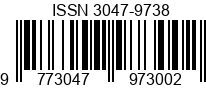
| E-ISSN | 3047-9738 |
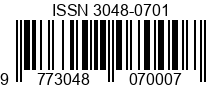
| P-ISSN | 3048-0701 |
| Editor-in-Chief | Dr. Ahmad Maulidizen, SE.Sy, M.Sh, MM.
Universitas Dian Nusantara, Indonesia
|
| DOI Prefix | 10.70063 |
| Publisher | Yayasan Mabadi Iqtishad Al Islami in Collaboration with Universitas Bina Insan Lubuk Linggau |
| Access Model | Open Access |
| Subject Area | Islamic Law and Legal Studies |
| First Publication | June 2024 |
Journal of Islamic Law and Legal Studies (JILLS) is a peer-reviewed, open-access academic journal published by Yayasan Mabadi Iqtishad Al Islami in collaboration with Universitas Bina Insan Lubuk Linggau. The journal is dedicated to advancing scholarly research, critical inquiry, and interdisciplinary dialogue in Islamic law and legal studies. It provides an academic platform for researchers, scholars, academics, and legal practitioners to disseminate original research findings, theoretical contributions, empirical investigations, and critical analyses concerning the development and application of Islamic legal principles in contemporary societies.
The journal focuses on the relationship between classical Islamic legal traditions and contemporary legal, social, economic, environmental, and technological developments. Its scholarly orientation encompasses Islamic jurisprudence (fiqh), Islamic legal theory (usul al-fiqh), Maqasid al-Shariah, comparative legal studies, Islamic constitutional and criminal law, family law, human rights, Islamic economic law, Islamic finance, and Sharia governance. JILLS particularly welcomes research examining the interpretation, implementation, and transformation of Islamic legal principles within national legal systems, international regulatory frameworks, and evolving social institutions.
Adopting an interdisciplinary approach, JILLS encourages scholarly contributions addressing contemporary developments in Islamic banking and financial transactions, Islamic contract law, waqf and zakat governance, Islamic social finance, halal industry regulation, consumer protection, dispute resolution, and Sharia-compliant economic systems. The journal also welcomes research exploring emerging issues involving financial technology, digital assets, artificial intelligence, digital governance, environmental justice, sustainable development, and the ethical implications of technological innovation from Islamic legal perspectives.
In the field of Islamic family law and social justice, the journal supports critical investigations into marriage and divorce regulations, child custody, legal protection, access to justice, Islamic legal education, and community-based legal development. Contributions examining the interaction between Islamic legal norms, state legislation, judicial practices, institutional governance, and changing societal values are particularly encouraged. Comparative and cross-jurisdictional studies are welcomed when they contribute to a deeper understanding of Islamic law within diverse legal and cultural contexts.
JILLS publishes original research articles employing qualitative, quantitative, mixed-methods, normative juridical, doctrinal, comparative, historical, socio-legal, and other academically appropriate research methodologies. Submitted manuscripts are expected to demonstrate originality, clearly defined research objectives, relevant theoretical and conceptual foundations, methodological rigor, critical analysis, and conclusions supported by credible evidence and scholarly reasoning. The journal particularly values contributions that advance Islamic legal scholarship through innovative perspectives, interdisciplinary integration, and meaningful theoretical or practical implications.
To maintain scholarly quality and publication integrity, JILLS applies editorial assessment and peer-review procedures to submitted manuscripts. Editorial evaluation considers the relevance of manuscripts to the journal's aims and scope, originality, methodological appropriateness, analytical depth, quality of argumentation, and contribution to existing scholarship. Authors, editors, and reviewers are expected to uphold academic integrity, intellectual responsibility, transparency, confidentiality, and ethical standards throughout the publication process.
The journal is committed to promoting publication ethics and responsible scholarly communication. JILLS recognizes the importance of preventing plagiarism, duplicate publication, inappropriate authorship, data fabrication or falsification, undisclosed conflicts of interest, and other forms of academic misconduct. The responsible use of artificial intelligence and digital research tools is also encouraged, provided that authors remain accountable for the originality, accuracy, reliability, and scholarly integrity of their manuscripts and comply with applicable editorial requirements.
As an open-access journal, JILLS provides free access to its published scholarly content, supporting the dissemination of knowledge without subscription barriers. Authors retain copyright over their scholarly contributions, while permissions for reuse, distribution, and adaptation are governed by the journal's applicable licensing and copyright policies. The journal also recognizes the importance of scholarly metadata, persistent digital identifiers, and long-term digital preservation in maintaining the accessibility and discoverability of published research.
Published twice annually, in June and December, JILLS commenced publication in June 2024. The journal welcomes scholarly contributions from researchers and institutions worldwide, encouraging international collaboration, comparative legal perspectives, and cross-cultural academic dialogue. Through its commitment to interdisciplinary research, academic integrity, open access, and critical engagement with contemporary challenges, Journal of Islamic Law and Legal Studies seeks to contribute to the advancement of Islamic legal knowledge and strengthen the relevance of Islamic law within modern legal systems and global scholarly discourse.
The journal's publications and scholarly information can be accessed or discovered through the following academic databases, metadata services, library platforms, and research discovery resources.
 |
 |
 |
 |
 |
 |
 |
 |
 |
 |
 |
 |
 |
 |